If you want to run a successful med spa in 2026, you need to do more than just add a new laser or dermal filler treatment to your menu. The industry is on track to hit $30 billion globally, meaning competition is fiercer than ever.
Patient expectations are also higher, staffing is tighter, and margins are under pressure. The key to growth is new services and new systems for providing care.
Patients now want personalized, long-term “skin journeys,” not one-off appointments. They expect to book from their phone and get their peptide treatment tailored to their biology.
So, how do you build this system? What should you invest in? We’ll break down the tech, treatment, and team medspa trends you’ll see in 2026 to help you prepare.
Key Takeaways:
- In 2026, AI will become the baseline for patient experience. It will be used for scheduling, treatment personalization, and smart devices.
- Regenerative aesthetics will take over and focus on collagen stimulation that lasts 18–24 months instead of quick fixes.
- Treatment “protocols” will replace single services as patients want bundled, multi-month skin treatments that provide longer-lasting results.

5 Technology Trends in Medical Spas in 2026
Here’s what you’ll see going forward in 2026:
1. AI-Driven Personalization
AI is on track to become the baseline for patient experience in 2026. Already, about 40% of med spas are using AI for scheduling, intake, and customer service. That’s expected to increase above 65% next year.
Smart reminders alone can increase show-up rates by 11%, while personalized treatment recommendations help nearly half of patients consistently purchase suggested add-ons.
AI also helps anticipate patient needs, standardize the front-end experience, and free staff to focus on care. All of this makes it both a tool for growth and a new expectation for patients in 2026.
2. Mobile-First Booking and Digital Intake
In 2026, a seamless digital journey, including online booking, intake forms, secure payment, and automated prep instructions, will be table stakes.
Spas that provide this experience will be able to reduce phone traffic, cut administrative work, and capture the 55% of patients who prefer to book digitally.
So, if a patient can’t book you easily online, they’ll book with a competitor who makes it simple. This will be a basic expectation in 2026.
3. Telehealth for Compliance and Reach
Telehealth will become a standard part of how medical spas deliver care in 2026. Already, hundreds of med spas are piloting virtual consultation workflows. Their number is expected to grow in 2026 as patient demand increases.
For instance, HIPAA-compliant video visits make it possible to conduct initial “good-faith” exams and handle follow-up check-ins without requiring patients to come into the med spa. This increases your reach beyond your local area and makes it easier to maintain continuity of care.
4. Personalized Treatment Planning Algorithms
Patients now expect hyper-personalization, with 98% wanting a personalized experience the moment they walk in, or even before. Personalized treatment planning algorithms will make that possible.
You’ll see AI skin mapping and AR outcome previews become standard during consultations. These tools will algorithmically generate device settings, injectable plans, and post-care regimens unique to each patient’s biology. This will make personalization a spa protocol.
5. AI-Embedded Devices and Faster FDA Pathways
In 2026, many of the devices in med spas will be “smart” in ways we’re just starting to see today. AI-embedded devices can adjust settings in real time based on a patient’s physiology, skin type, or treatment response, making procedures more accurate and consistent.
The FDA is speeding up approvals for next-generation devices. In 2024, it appointed its first Chief AI Officer to make clearance for AI-driven technologies faster. This means “smart” lasers, RF platforms, and ultrasound devices will reach the market sooner next year.
5 Med Spa Treatment Trends You’ll See in 2026
Here’s how service mixes are moving toward long-term results and exclusive offerings in 2026:
1. Regenerative and Biostimulator Therapies
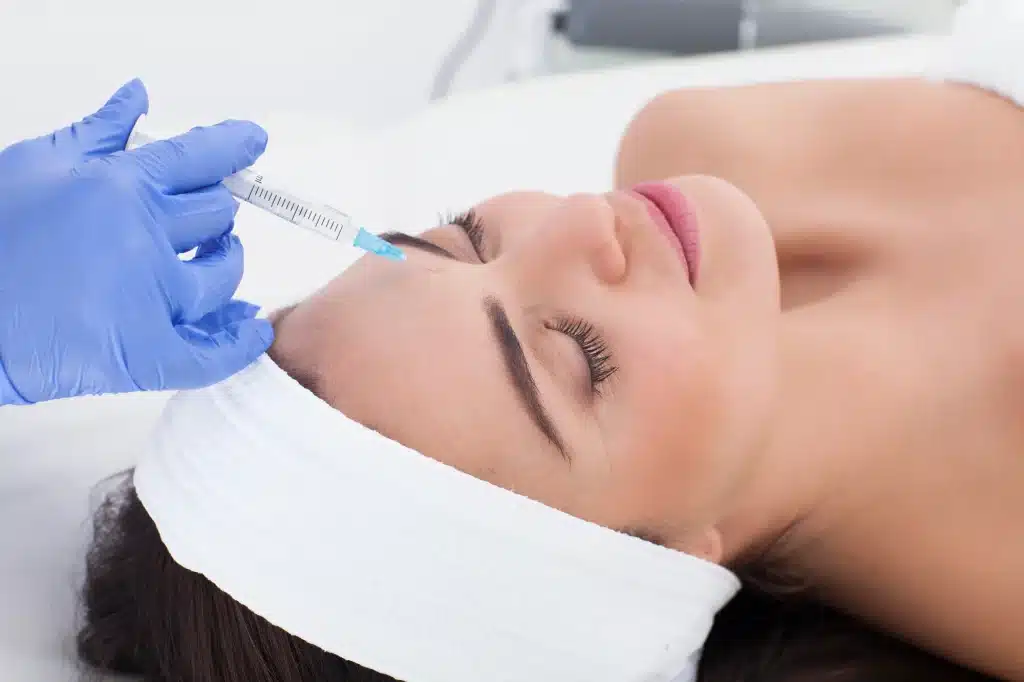
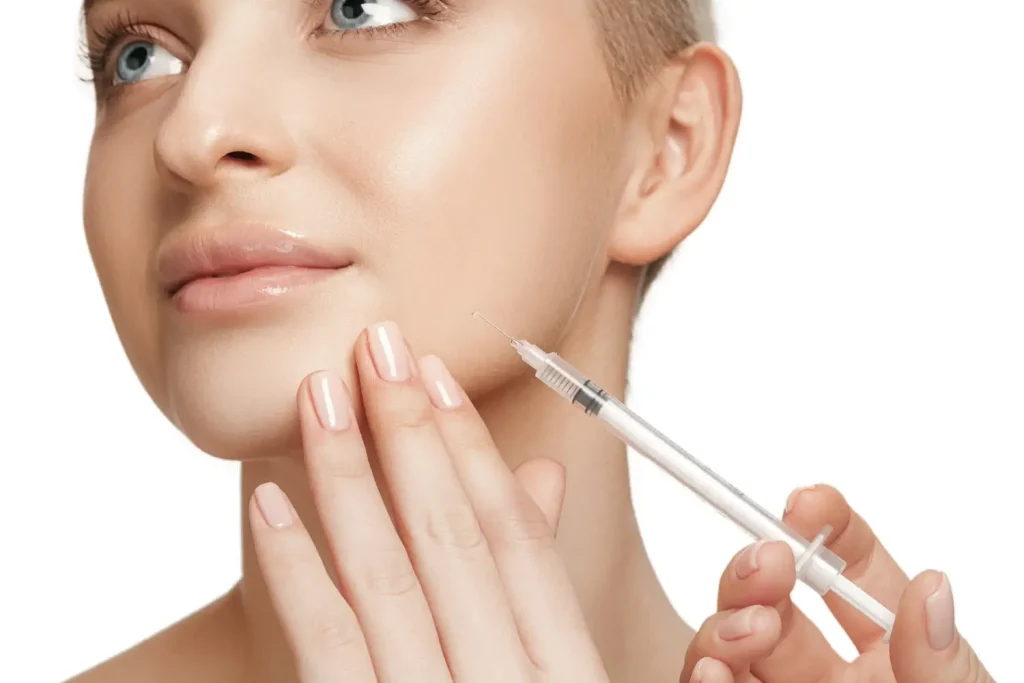
The six-month filler touch-up will give way to biostimulatory agents like Sculptra, Radiesse, polynucleotides, and PCL/PLLA threads in 2026.1 These produce a gradual improvement that peaks at 3-6 months and lasts 18-24 months.
This fulfills the patient demand for long-term results over quick fixes. It also leads to 2-4 visits per year compared to 1-2 for HA filler, which creates more predictable revenue and raises customer lifetime value.
2. Non-Invasive Energy-Based Modalities
RF and micro-focused ultrasound is set to become the new “scalpel-less facelift” in 2026. These provide uniform heat at 1.5–4.5 mm depths, which tightens SMAS and stimulates neocollagenesis in about a half-hour.2
And demand is rising fast. Device shipments in the category are growing at 10.6% to 10.9% every year. Early adopters are already charging a premium when they bundle upper-face RF with submental ultrasound in a single 30-minute session.
3. Minimally Invasive Body Contouring Technologies
Patients want faster, more complete results with fewer visits. 2026 will see med spas meeting that demand with multi-modality body-contouring techniques like cryolipolysis, diode-laser lipolysis, and electromagnetic muscle stimulation.3
At the same time, patients on medications like Ozempic or Mounjaro are entering med spas in record numbers. A 2024 survey found that 63% of aesthetics patients following GLP-1 treatment are entirely new to the industry.
These patients need solutions for the loose skin and stubborn areas that remain. This creates a constant demand for body contouring services, which makes it one of the most reliable growth sectors for 2026.
4. Exosomes and Growth-Factor Post-Procedure Care
Patients want faster recovery and visible results, and in 2026, exosome and growth-factor therapies will become the go-to post-procedure add-on.
These are applied immediately after fractional laser or RF microneedling and cut redness and downtime by 30-50%.4
Plus, since they’re positioned as the next step from PRP, they tap into the booming regenerative aesthetics market, projected to grow at over 35% annually.
5. Color-Blind Laser Technologies
For years, med spas have turned away a huge segment of the market. Patients with melanin-rich skin (Fitzpatrick V-VI) were often told lasers were “too risky” for their hair removal or pigment concerns.5 They were excluded.
In 2026, that will change into a major opportunity.
New laser technologies like Aerolase and Pico-Plus use ultra-short pulses of energy that target the hair follicle without generating a lot of heat. This “non-thermal” effect means they can safely treat darker skin tones without the risk of burns, hyperpigmentation, or hypopigmentation that made older lasers dangerous.6
So, med spas that invest in these devices will get access to roughly 30% of the consumer population who were previously underserved or turned away.
3 Business Model and Workforce Shifts You’ll See in 2026
The med spa owner of 2026 is different. Here are three major trends you’ll see in 2026:
1. Protocolization
In 2026, you may see more med spas run by owners from outside aesthetics, like finance, retail, or tech backgrounds.
In fact, about 63% of all U.S. med spas are owned by non-physicians and non-surgeons. 80% of physician-owned med spas are run by doctors from “non-core” specialties outside of plastic surgery or dermatology.
They focus on systemizing every aspect of operations, like treatment systems and bookings, to create repeatable, brand-consistent protocols.
2. “Labor-as-a-Service”
With 40% of med spa owners naming “staff shortage” as their biggest operational headache, the talent war is real. The response in 2026 won’t just be higher pay; it will be AI models to fill gaps where spas can’t find people to fill in.
You’ll very likely see the formalization of traveling expert networks, where injectors or laser specialists are contracted for periodic “circuit” visits to multiple spas without hiring them permanently.
3. Data-Driven Staffing
Med spas are getting more complex. In 2026, they’ll offer more advanced treatments, like biostimulators, new lasers, and combination procedures. And each type of treatment requires specific skills.
If a spa guesses who to schedule or what training to provide, they risk overbooking unqualified staff or underutilizing experts.
Right now, some spas already track which treatments are booked most often, but in 2026, this will become standard. They’ll use data to see exactly which skills are needed, train staff ahead of time, and make sure the right provider is available.
Prepare for 2026 With Medical Spa Rx
2026 will be a year of change. AI will help personalize treatments, and tech will help you reach more patients than ever. But one thing won’t change: patient outcomes will still depend on your technique and the quality of the products you use.
At Medical Spa RX, you’ll find original, name-brand dermal fillers like PowerFill and Sculptra, exosomes, and other supplies sourced directly from licensed manufacturers. Since 2009, we’ve helped med spas get verified products, with fast delivery and no order minimums.
Every item comes with a verifiable LOT number, so you know exactly what you’re injecting and where it came from. When you’re ready to build what’s next, start with supplies you can trust. Browse our selection of high-quality medical supplies at Medical Spa Rx today.

References
1. Fisher SM, Borab Z, Weir D, Rohrich RJ. The emerging role of biostimulators as an adjunct in facial rejuvenation: A systematic review. J Plast Reconstr Aesthet Surg. 2024;92:118-129. doi:10.1016/j.bjps.2024.02.069
2. Marquardt K, Hartmann C, Wegener F, et al. Microfocused Ultrasound With Visualization Induces Remodeling of Collagen and Elastin Within the Skin. J Cosmet Dermatol. 2025;24(1):e16638. doi:10.1111/jocd.16638
3. Swanson E. A Systematic Review of Electromagnetic Treatments for Body Contouring. Ann Plast Surg. 2023;90(2):180-188. doi:10.1097/SAP.0000000000003387
4. Lee YS. Regenerative Skin Remodeling through Exosome-Based Therapy: A Case Study Demonstrating 21-Month Sustained Outcomes in Pore Size, Erythema, and Hyperpigmentation. Dermatol Ther (Heidelb). 2025;15(10):3055-3064. doi:10.1007/s13555-025-01501-3
5. Sharma AN, Patel BC. Laser Fitzpatrick Skin Type Recommendations. [Updated 2023 Mar 6]. In: StatPearls [Internet]. Treasure Island (FL): StatPearls Publishing; 2025 Jan-. Available from: https://www.ncbi.nlm.nih.gov/books/NBK557626/
6. Pamela RD, Vitale MD, Fusco I, Zingoni T, Yi KH. Experience using 675 nm laser on three cases of Fitzpatrick skin type IV-V with melasma. Skin Res Technol. 2024;30(5):e13748. doi:10.1111/srt.13748