



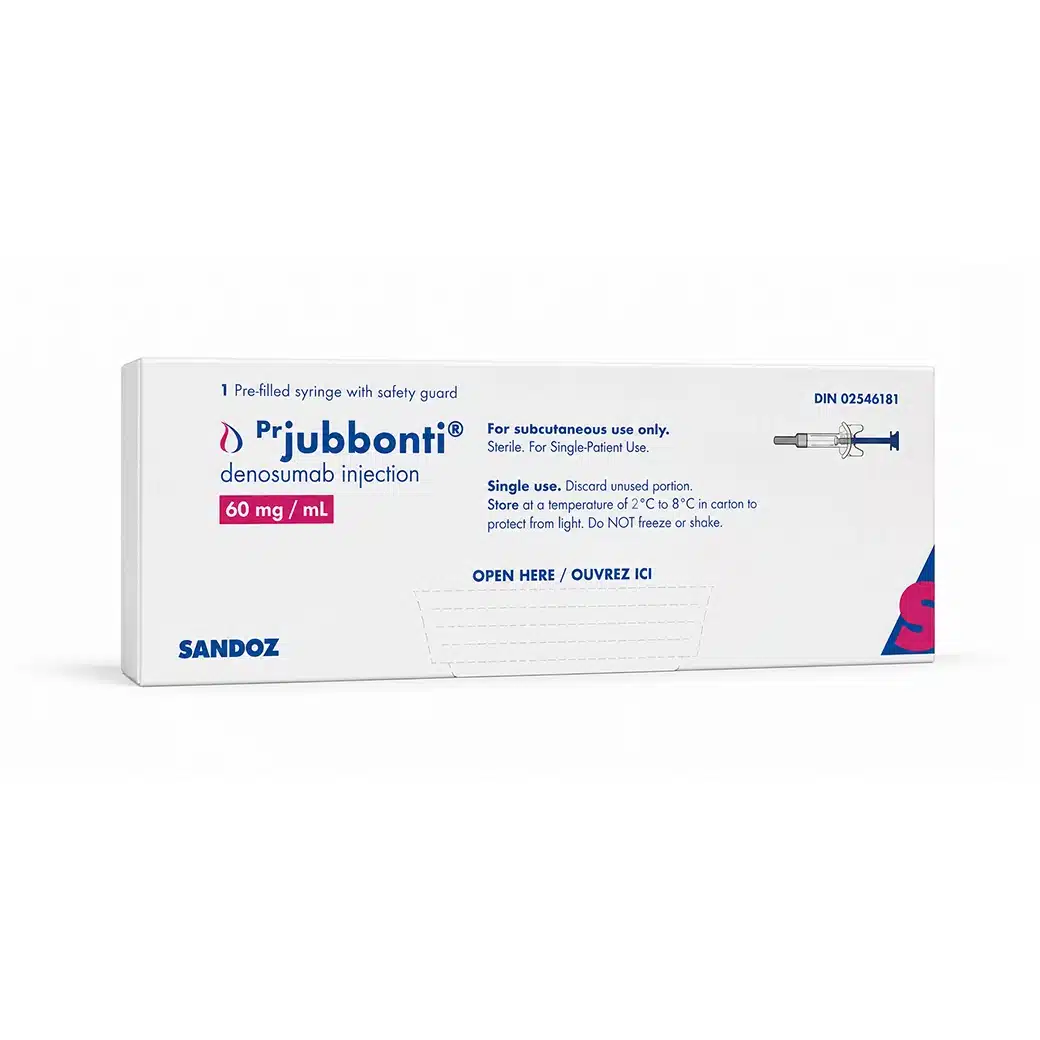
Jubbonti® 60mg — Denosumab Biosimilar Injection for Osteoporosis
Healthcare professionals looking to buy Jubbonti® 60mg may consider this FDA-approved denosumab biosimilar for the management of osteoporosis and bone loss in specific patient populations. Jubbonti® injection is a biosimilar to Prolia, containing the same active molecule and approved indications, and follows the same mechanism of action.
As interest in osteoporosis therapies continues to grow, clinicians often evaluate the mechanism of action, approved indications, and whether current reimbursement pathways support patient access. Healthcare practices looking to buy Jubbonti® and inquire on availability, coverage information, and product access may contact Medical Spa Rx for guidance.
What Are the Purported Benefits of Jubbonti® 60mg?
Jubbonti® is a denosumab biosimilar indicated for the treatment of osteoporosis and other bone loss conditions in certain patient populations. Understanding the approved uses of Jubbonti® is important when evaluating long-term fracture prevention strategies, especially among postmenopausal women at increased fracture risk.
Jubbonti® (60mg) is primarily indicated for:
- Postmenopausal osteoporosis in women at increased fracture risk
- Bone loss associated with hormone ablation therapy in men and women
- Glucocorticoid-induced osteoporosis
- Reduction of vertebral, non-vertebral, and hip fracture risk
Menopause-related bone loss remains one of the leading causes of osteoporotic fractures worldwide. Denosumab therapies help reduce fracture risk by slowing bone breakdown and preserving bone mineral density.
Jubbonti® targets RANK Ligand (RANKL), a key protein involved in osteoclast activation and survival. By binding to RANKL, the medicine prevents activation of osteoclast precursors and reduces osteoclast formation and activity. The primary cells in the body affected by Jubbonti® are osteoclasts, which break down bone tissue. Inhibiting these cells helps reduce bone resorption, maintain skeletal strength, and preserve bone mineral density (BMD).
Because Jubbonti® contains the same denosumab molecule as Prolia, both therapies share the same molecular target, pharmacologic pathway, and clinical effect. Biosimilar equivalence has been confirmed through FDA and EMA evaluation processes, supporting expectations of comparable efficacy and safety profiles.
For related products in bone health and skeletal care, see osteoporosis treatment options available through Medical Spa Rx.
What You Need to Know Before You Buy Jubbonti® 60mg
Healthcare professionals researching Jubbonti® often want to understand its formulation, regulatory background, and manufacturer information before prescribing. Jubbonti® is a fully human monoclonal IgG2 antibody biosimilar containing denosumab 60mg/mL in a prefilled syringe for subcutaneous injection.
Product specifications include:
- Active Ingredient: Denosumab (denosumab-bbdz)
- Strength: 60mg/mL
- Format: Prefilled syringe for subcutaneous injection
- FDA Approval Date: March 5, 2024
- Manufacturer and U.S. Licensee: Sandoz Inc.
Jubbonti® (denosumab-bbdz) received FDA approval on March 5, 2024, as an interchangeable biosimilar to Prolia for all approved indications. Jubbonti® availability continues to expand through licensed distributors and authorized pharmaceutical supply channels. Healthcare professionals should note that the medicine is available by prescription only and intended for use under medical supervision.
What Does Scientific Research Say About Jubbonti® 60mg?
Clinical studies evaluating denosumab have consistently demonstrated reductions in vertebral, non-vertebral, and hip fracture risk in postmenopausal women with osteoporosis. Long-term data from the FREEDOM trial and its open-label extension support sustained improvements in bone mineral density with continued therapy over ten years.
Research also highlights the importance of pre-treatment calcium screening. Studies indicate that denosumab may worsen pre-existing hypocalcaemia, and that adequate calcium and vitamin D supplementation throughout therapy supports safe and effective treatment outcomes.
Discontinuation studies have identified a risk of rebound bone loss following cessation of denosumab therapy. Rapid decline in bone mineral density and increased vertebral fracture risk have been observed after stopping treatment, reinforcing the need for a structured transition plan when discontinuing therapy.
Medicare Part B generally covers denosumab injections administered in appropriate clinical settings when medically necessary. Because Jubbonti® qualifies as a biosimilar, it typically follows the same reimbursement framework as Prolia. Providers should verify current CMS coverage policies and formulary requirements before treatment initiation, as reimbursement terms are subject to change.
Current as of May 2026: Regulatory and reimbursement status may change as healthcare policies evolve.
What Are the Side Effects and Safety Considerations of Jubbonti® 60mg?
Healthcare providers should review potential Jubbonti® side effects before initiating therapy. The most clinically significant adverse effect is hypocalcaemia, particularly in patients with renal impairment or pre-existing calcium deficiencies. Treatment should be administered under the supervision of a qualified medical professional to ensure safe and effective management of osteoporosis.
Other reported side effects include:
- Musculoskeletal pain
- Injection site reactions
- Severe skin infections
- Osteonecrosis of the jaw (ONJ)
- Atypical femoral fractures
- Rebound bone loss after discontinuation
Bone mineral density may decline rapidly after stopping treatment, increasing fracture risk and highlighting the importance of long-term monitoring and transition planning.
Patients should discuss all medicines, vitamins, and supplements with their doctor or pharmacist before starting therapy. Although major drug interactions are not well documented, monitoring may still be necessary when combining therapies that affect calcium metabolism or bone health.
What Are the Storage Conditions for Jubbonti® Injection?
Proper storage is essential for maintaining product integrity and ensuring the effectiveness of Jubbonti injection.
Storage recommendations include:
- Refrigerate at 2–8°C
- Protect the product from light
- Do not freeze or refreeze the syringe
- The product may remain at room temperature up to 25°C for up to 30 days before use
- Store according to manufacturer guidance and institutional handling procedures
Healthcare professionals should always follow supplier instructions and standard storage protocols to maintain product stability throughout handling and administration.
References
Cummings SR, Martin JS, McClung MR, et al. Denosumab for Prevention of Fractures in Postmenopausal Women with Osteoporosis. N Engl J Med. 2009;361(8):756-765. doi:10.1056/nejmoa0809493
Kumar S, Wang M, Kim AS, McDonald MM, Girgis CM. Denosumab discontinuation in the clinic: implications of rebound bone turnover and emerging strategies to prevent bone loss and fractures. J Bone Miner Res. 2025;40(9):1017-1034. doi:10.1093/jbmr/zjaf037
Miyazaki T, Tokimura F, Tanaka S. A review of denosumab for the treatment of osteoporosis. Patient Prefer Adherence. 2014;8:463-471. Published 2014 Apr 8. doi:10.2147/PPA.S46192
McClung MR. Denosumab for the Treatment of Osteoporosis. Korean J Intern Med. 2017;32(4):599-608.
Sánchez A, Brun LR, Salerni H, et al. Effect of Denosumab on Bone Mineral Density and Markers of Bone Turnover among Postmenopausal Women with Osteoporosis. J Osteoporos. 2016;2016:8738959. doi:10.1155/2016/8738959
Papapoulos S, Lippuner K, Roux C, et al. The effect of 8 or 5 years of denosumab treatment in postmenopausal women with osteoporosis: results from the FREEDOM Extension study. Osteoporosis Int. 2015;26(12):2773-2783. doi:10.1007/s00198-015-3234-7
Disclaimer
For licensed medical professionals only. This content is for informational purposes only and does not constitute medical advice.