



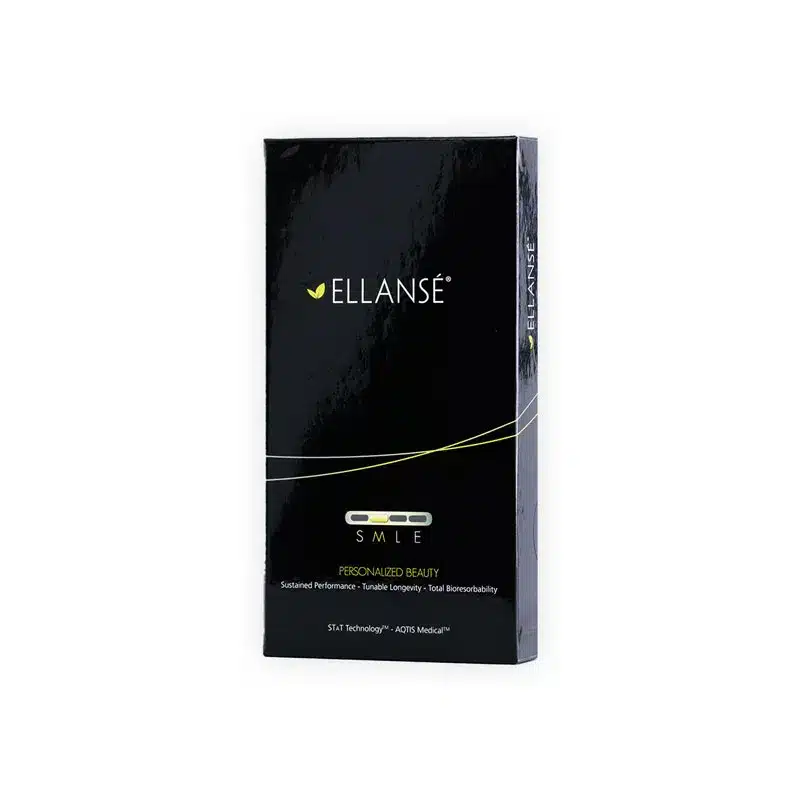
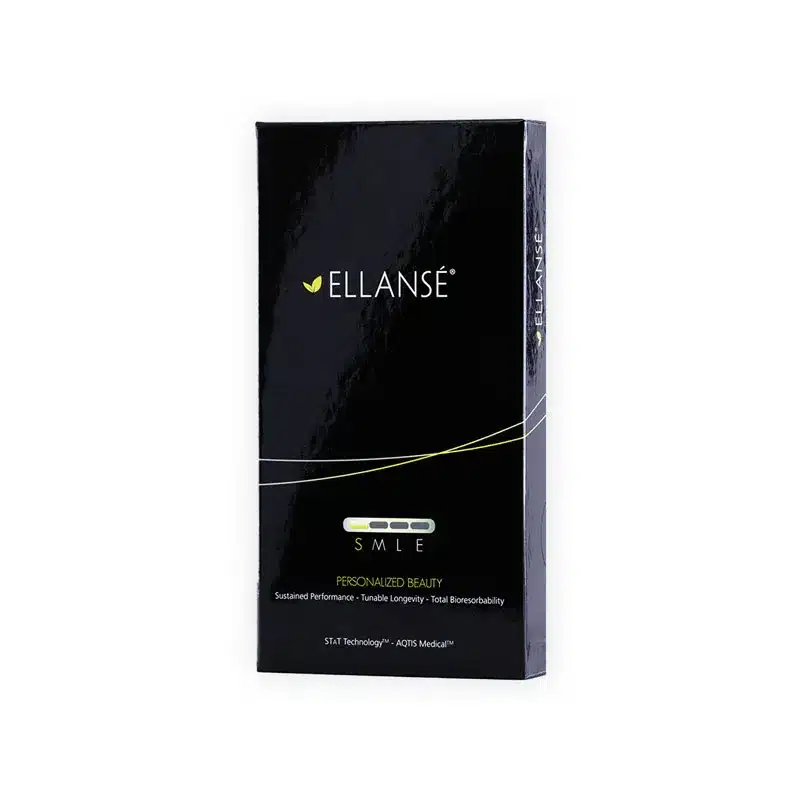
ELLANSÉ
Ellansé is a CE-marked polycaprolactone (PCL) collagen-stimulating filler developed by Sinclair Pharma, engineered to deliver two distinct mechanisms in a single injectable: immediate volume from its carboxymethylcellulose (CMC) carrier gel, and gradual collagen stimulation from PCL microspheres as they degrade over time. Available in four duration variants — S, M, L, and E — with published duration profiles of about 1, 2, 3, and 4 years, respectively, it is notable for offering multiple longevity options within a single product family. Medical Spa Rx offers secure online ordering of Ellansé filler products in both individual and bulk quantities for licensed aesthetic professionals. Compare the Ellansé collagen stimulator variants below and buy Ellansé online through Medical Spa Rx’s verified wholesale platform.
Find More with Just a Click!
Can’t spot what you need in our catalog? Fret not–just sign up for our expert consultations. We will provide the insights you need. We're here to guide you to your clinic's potential; no product browsing needed
ELLANSÉ products
Other information
About Ellansé — PCL Biostimulator Filler for Facial Rejuvenation
Ellansé is manufactured by Sinclair Pharma, a specialty aesthetics company with a portfolio of injectables marketed across multiple international markets. Introduced to the European market in 2009 following CE marking, it has accumulated over a decade of clinical use and post-market data [2][5].
Unlike conventional hyaluronic acid fillers that occupy space until they break down, Ellansé operates through a dual-action platform. Its CMC carrier gel delivers immediate volume at the point of injection, while the suspended PCL microspheres initiate a sustained process of neocollagenesis in the treated tissue. As the PCL degrades, results evolve over time as collagen remodeling continues, with the product stimulating the body’s own collagen production in the treated area [1][2][5].
Why Practitioners Choose Ellansé Over Other Fillers and Biostimulators
Two attributes consistently distinguish Ellansé when practitioners compare it against competing products.
- Dual-Action Mechanism: Most biostimulators require several treatment sessions before patients see meaningful volumetric improvement, because the stimulation mechanism acts gradually without an immediate volume component. Ellansé’s CMC carrier resolves this: practitioners and patients observe visible correction at the time of treatment, while collagen formation continues to develop results over subsequent months [1][2][5].
- Multi-Variant Duration System: Ellansé-S, -M, -L, and -E each use the same PCL biostimulator technology but have different microsphere degradation profiles, with published duration profiles of about 1, 2, 3, and 4 years, respectively [2][3]. Ellansé is notable for offering multiple longevity variants within a single product family, allowing practitioners to individualize treatment duration to anatomy, patient age, lifestyle, and preference.
The Technology — How PCL Microspheres Stimulate Collagen
Each syringe contains 30% PCL microspheres (25–50 microns in diameter) uniformly suspended in a 70% CMC carrier gel [1][2][5]. There is no hyaluronic acid component. CMC is a biocompatible polysaccharide that provides immediate volume at the time of injection; it progressively resorbs over the weeks following treatment. As the CMC dissipates, the PCL microspheres remain in the treated area and stimulate fibroblasts to produce new collagen — a process called neocollagenesis — which gradually develops in the space formerly occupied by the carrier gel [1][2][5].
PCL is a well-established biocompatible and biodegradable polymer used across medical device applications. In Ellansé, its degradation rate is controlled during manufacturing to produce the distinct duration profiles of each variant. The product stimulates the body’s own collagen production, contributing to results that evolve over time rather than simply fading [2].
Ellansé and Migration
Complication risk is technique-dependent and reduced by correct injection depth and volume, with the appropriate plane being the deep dermis, subdermis, or supraperiosteal, depending on the treatment zone [1]. Superficial injection significantly increases adverse event risk, a finding supported by retrospective safety data across over 1,100 treatments [4].
Reversibility of Ellansé
Because Ellansé contains no hyaluronic acid, hyaluronidase has no effect on it [2][5]. Unlike HA fillers, Ellansé cannot be reversed enzymatically. Reversal strategies described in case reports, including the use of a collagenase mixture for nodule management, remain investigational and are not standard care — management options are not equivalent to HA filler reversal [2][5][6]. Irreversibility must be clearly communicated to patients during pre-treatment consultation and informed consent.
About the Manufacturer — Sinclair Pharma
Sinclair Pharma is a specialty aesthetics company with commercial operations across Europe, the Middle East, Asia, and Latin America. Its injectable portfolio includes Ellansé and Perfectha, as well as a range of topical and energy-based aesthetic products [2][5]. Since Ellansé’s CE marking in 2009, Sinclair has supported the product with published clinical evidence covering safety, longevity, injection technique, and adverse event management [2][5].
Ellansé Product Range — Choosing Your Duration
All four Ellansé variants share the same PCL biostimulator technology and CMC carrier platform. What differentiates them is the molecular weight and crystallinity of the PCL microspheres, which determine the degradation rate and, therefore, the duration of the collagen-stimulating effect [2]. Published duration profiles are approximately one year for Ellansé-S, two years for Ellansé-M, and about three and four years for Ellansé-L and -E, respectively, though individual outcomes are influenced by anatomy, injection plane, technique, and patient factors [2][3].
Practitioners selecting across the full duration spectrum can buy dermal fillers at Medical Spa Rx to compare Ellansé variants alongside other collagen-stimulating and HA-based options in a single order.
Treatment Areas and Indications
Ellansé is used for facial rejuvenation across the deep dermal, subdermal, and supraperiosteal planes depending on the treatment zone. Commonly treated areas, as documented in expert guidance, include the nasolabial folds, cheeks, jawline, temples, chin, and hands [1]. These zones are subject to age-related volume loss, skin laxity, and soft-tissue descent — the core aesthetic concerns the product is designed to address.
Ellansé is used for mid-face volume restoration, facial contouring, and correction of skin laxity in patients who are not yet candidates for surgical intervention [1]. A prospective, blinded, split-face study comparing Ellansé with HA filler in 40 patients confirmed nasolabial fold correction with favorable patient satisfaction outcomes [7]. Superficial intradermal injection is not recommended per expert injection guidance and published technique recommendations [1].
Best Ellansé Products — What to Order
- Ellansé-S: The shortest-duration variant, with a published duration of at least 18 months in treated patients reported in clinical studies [2][3]. It is well-suited to first-time Ellansé patients, younger patients with moderate volume loss, or treatment zones where reassessment within a shorter timeframe is preferable. Ellansé-S provides the same immediate dual-action correction as longer-duration variants, with a degradation timeline that allows practitioners to evaluate individual patient response before selecting a longer-acting product.
- Ellansé-M: Offers a published duration of at least 24 months reported in clinical studies [2][3], balancing longevity with clinical flexibility. It is suitable for a broad range of facial indications including nasolabial folds, cheek augmentation, and jawline definition. Ellansé-M may be a practical choice for patients already familiar with the product’s mechanism and expected treatment trajectory.
- Ellansé-L: Described as a longer-duration option, commonly cited at about three years, appropriate for patients seeking sustained structural correction in less dynamically active zones such as mid-face volume restoration, temple filling, or deep structural contouring [2]. Patient selection for Ellansé-L should include a thorough discussion of the extended duration and the product’s non-reversible nature.
- Ellansé-E: The longest-duration variant, commonly cited at about four years [2]. It may be appropriate for patients with significant volume deficit who require sustained collagen stimulation and structural support over an extended period. Rigorous patient selection and pre-treatment counseling regarding irreversibility are essential before proceeding.
Administration and Injection Protocol
Ellansé is administered via injection into the deep dermis, subdermis, or supraperiosteal plane, depending on the anatomical zone and the degree of correction required per treatment guidance [1]. Both bolus and linear threading techniques are described in expert consensus guidance; practitioners should select the approach appropriate to each treatment site based on tissue plane and desired product distribution [1].
Aspiration before injection is recommended per expert guidance to minimize the risk of intravascular injection — a precaution particularly relevant given Ellansé’s non-reversible nature [1].
The CMC carrier resorbs over the weeks following treatment. The PCL microspheres degrade progressively, as reflected in published duration profiles: at least 18 months for Ellansé-S and at least 24 months for Ellansé-M, per clinical study data, with Ellansé-L and -E commonly cited at about 3 and 4 years, respectively. Collagen development continues over this period and may sustain results beyond the microsphere degradation timeline. Post-treatment, practitioners should follow IFU guidance on product massage to optimize distribution [1][5], and patients should be advised to avoid significant heat exposure and strenuous physical activity for 24 to 48 hours in accordance with product guidance [1].
Regulatory Status and Market Availability
Ellansé has held CE marking as a medical device since 2009, confirming it meets the essential safety and performance requirements of applicable EU regulatory frameworks [5]. It is commercially available in the United Kingdom, across EU member states, and in a range of international markets including several in Asia-Pacific and Latin America [5].
Ellansé has not received FDA clearance or approval for use in the United States and is not classified as an FDA-approved device [5]. Practitioners based in the US seeking collagen stimulator options within the FDA-approved framework should consider the alternatives discussed in the comparison section below. Practitioners in CE-mark jurisdictions who wish to purchase Ellansé online can order directly through Medical Spa Rx, which verifies professional credentials.
Ellansé Safety Profile — Side Effects and Contraindications
The most commonly reported adverse events following Ellansé injection are those typical of any facial injectable: localized swelling, bruising, redness, and tenderness at the injection site, which are transient and generally resolve without intervention [1][4]. Retrospective data from over 1,100 PCL-based filler treatments documented a low overall adverse event rate, with complication risk being technique-dependent and reduced by correct injection depth and volume [4].
Nodule formation is a recognized though rare complication, predominantly associated with superficial injection and failure to follow post-injection massage protocols per product guidance [4]. Unlike HA nodule management, Ellansé-associated nodules cannot be treated with hyaluronidase. Conventional management options have included intralesional triamcinolone, oral methotrexate, and surgical excision. A 2025 case series reported that a collagenase mixture resolved Ellansé-M nodules in a small group of patients using an ultrasound-guided technique [6]; however, this approach remains investigational, and management options are not equivalent to HA filler reversal.
Contraindications include known hypersensitivity to polycaprolactone or carboxymethylcellulose, active skin infection or inflammation at the planned injection site, pregnancy, and lactation [1]. The non-reversible nature of Ellansé must be clearly disclosed to every patient as part of informed consent before treatment [1].
Ellansé vs Competing Fillers and Biostimulators
Ellansé vs Sculptra®
Both Ellansé and Sculptra® (poly-L-lactic acid, PLLA) are collagen stimulators, but their clinical profiles differ in a practically significant way. Sculptra provides no immediate volumizing effect and requires a series of sessions before correction becomes visible; Ellansé’s CMC carrier delivers immediate volume at the time of injection [2]. In published comparisons, PCL-based fillers have longer published duration profiles than PLLA-based collagen stimulators, and a 2025 study comparing PCL and PLLA for nasolabial fold correction found that PCL showed greater wrinkle reduction at three and six months post-treatment [8]. Practitioners evaluating these two biostimulator approaches can buy Sculptra® at Medical Spa Rx.
Ellansé vs Radiesse®
Radiesse® (calcium hydroxylapatite, CaHA) is a biostimulatory filler with both an immediate correction component and collagen-stimulating properties, making it the closest mechanical analog to Ellansé. The key clinical distinction is longevity flexibility: Radiesse is available in a single formulation with a fixed duration, whereas Ellansé offers four variants with published duration profiles of about 1, 2, 3, and 4 years [2]. For practitioners who individualize treatment duration by patient and indication, Ellansé’s multi-variant system offers a degree of flexibility that CaHA-based fillers do not offer within a single product family. Practitioners can buy Radiesse® at Medical Spa Rx for comparison.
Ellansé vs JUVÉDERM®
JUVÉDERM® is a family of HA fillers offering volumisation without a collagen-stimulating effect and is fully reversible with hyaluronidase — a meaningful clinical distinction from Ellansé, which cannot be dissolved enzymatically [2][5]. Ellansé may be preferred when the clinical objective is long-term collagen induction and progressive improvement in tissue quality; JUVÉDERM may suit patients or practitioners who prioritize adjustability and reversibility. Practitioners can buy JUVÉDERM® at Medical Spa Rx alongside Ellansé.
Ellansé vs RESTYLANE®
RESTYLANE® is an HA-based volumizer without biostimulatory properties. Where Ellansé provides progressive collagen stimulation with results that evolve over time as PCL degrades, RESTYLANE delivers volume that diminishes as HA breaks down without stimulating collagen remodeling [2]. Ellansé may be preferred when the clinical goal is long-term improvement in tissue quality through collagen remodeling. Practitioners can buy RESTYLANE® at Medical Spa Rx to compare the two options.
Ellansé vs BELOTERO®
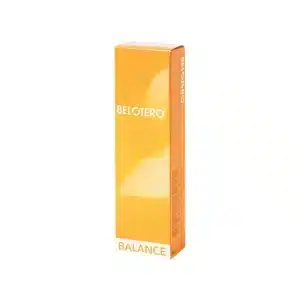
BELOTERO® is an HA filler designed for fine-line correction and superficial dermal placement — a profile that makes it complementary to rather than directly competitive with Ellansé, which is used at deeper injection planes for volumisation and structural support [1]. Using both products in the same patient for different indications is a recognized clinical approach. Practitioners can buy BELOTERO® at Medical Spa Rx.
FAQs
What is Ellansé?
Ellansé is a CE-marked collagen-stimulating filler manufactured by Sinclair Pharma, combining immediate volume from its CMC carrier gel with gradual collagen stimulation from PCL microspheres as they degrade in the tissue [1][2][5]. It is available in four duration variants — S, M, L, and E — with published duration profiles of about 1, 2, 3, and 4 years, respectively. Practitioners and qualified clinics looking to order Ellansé should ensure they select the appropriate formulation based on treatment objectives, patient needs, and applicable regulatory requirements in their market.
What is Ellansé made of?
Ellansé consists of 30% polycaprolactone (PCL) microspheres (25–50 microns in diameter) suspended in a 70% carboxymethylcellulose (CMC) carrier gel [1][2][5]. It contains no hyaluronic acid component. Clinics and qualified practitioners looking to buy Ellansé wholesale should review product specifications, regulatory requirements, and supplier guidelines to ensure appropriate sourcing for their practice needs.
How long does Ellansé last?
Duration varies by variant. Published clinical studies report a duration of at least 18 months for Ellansé-S and at least 24 months for Ellansé-M [2][3]; Ellansé-L and -E are commonly cited as about 3 and 4 years, respectively. Individual outcomes are influenced by anatomy, injection plane, technique, and patient factors, and results evolve over time as collagen remodeling continues.
Can Ellansé be dissolved?
No. Ellansé contains no hyaluronic acid, and hyaluronidase has no effect on it [2][5]. No standard reversal protocol currently exists; strategies described in case reports, including collagenase-based nodule management, remain investigational and are not equivalent to HA filler reversal [2][5][6]. Irreversibility must be discussed with patients before treatment as part of informed consent.
Is Ellansé FDA approved?
No. Ellansé holds CE marking for EU, UK, and international markets but has not received FDA clearance or approval [5]. It is not currently available through standard commercial channels in the United States.
Does Ellansé migrate?
Complication risk is technique-dependent and is reduced by correct injection depth and volume [1][4]. Superficial injection significantly increases adverse event risk, a finding supported by retrospective safety data from over 1,100 treatments [4].
Is Ellansé a biostimulator or a filler?
It functions as both. The CMC carrier provides immediate volume at the time of injection; the PCL microspheres stimulate neocollagenesis as they degrade [1][2]. Ellansé is best described as a collagen-stimulating filler that combines the properties of both product classes.
What are the side effects of Ellansé?
Common adverse events are injection-site reactions — swelling, bruising, redness, and tenderness — which are transient and generally resolve without intervention [4]. Nodule formation is a recognized though rare complication, predominantly technique-dependent, and cannot be managed with hyaluronidase. Management options differ fundamentally from those available for HA filler complications.
Trying to buy Ellansé online?
Medical Spa Rx stocks Ellansé across all four duration variants with secure checkout, add-to-cart ordering, and both individual and bulk purchasing options for licensed aesthetic professionals. You can buy Ellansé products, compare variant duration profiles, and place wholesale orders to match your clinic’s stocking requirements in a single transaction. Browse the available range and proceed to secure checkout, or contact Medical Spa Rx directly for bulk pricing and purchasing support.
Resources
- de Melo FC, Nicolau PJ, Piovano L, et al. Recommendations for volume augmentation and rejuvenation of the face and hands with the new generation polycaprolactone-based collagen stimulator (Ellansé®). Clinical, Cosmetic and Investigational Dermatology. 2017. https://doi.org/10.2147/CCID.S145195
- Christen MO, Vercesi F. Polycaprolactone: How a Well-Known and Futuristic Polymer Has Become an Innovative Collagen-Stimulator in Esthetics. Clinical, Cosmetic and Investigational Dermatology. 2020. https://doi.org/10.2147/CCID.S229054
- Moers-Carpi MM, Sherwood S. Polycaprolactone for the correction of nasolabial folds: A 24-month, prospective, randomized, controlled clinical trial. Dermatologic Surgery. 2013. https://www.ncbi.nlm.nih.gov/pmc/articles/PMC3615178/
- Lin SL, Christen MO. Polycaprolactone-based dermal filler complications: A retrospective study of 1111 treatments. Journal of Cosmetic Dermatology. 2020. https://doi.org/10.1111/jocd.13518
- Christen MO, et al. Ellansé® Summary of Safety and Clinical Performance (SSCP). Sinclair Pharma. https://sinclair.com/media/dzunuwow/e-mdd-sscp-02-ellanse-mdd-sscp_digital-version-copy.pdf
- Wu L. iCare Technique of Dissolving Ellanse M Nodules Using Collagenase: A Case Series and Experimental Study. Journal of Cosmetic Dermatology. 2025. https://pubmed.ncbi.nlm.nih.gov/40296530/
- Molloy P. Comparing collagen stimulators and hyaluronic acids fillers: Ellansé vs MaiLi. Journal of Aesthetic Nursing. 2024. https://www.researchgate.net/publication/382169851_Comparing_collagen_stimulators_and_hyaluronic_acids_fillers_Ellanse_vs_MaiLi
- Hu K, Wang S. Comparing the Safety and Effectiveness of PCL and PLLA Injections for Nasolabial Fold Correction. Journal of Cosmetic Dermatology. 2025. https://doi.org/10.1111/jocd.70414
The page and all of its displayed contents are for medical professionals, designed to inform only, and not as a replacement for medical advice.
Written and reviewed by the Medical Spa Rx Editorial Team
All clinical and product claims on this page have been checked against peer-reviewed research, manufacturer data, and regulatory sources in accordance with our Editorial Policy .