



RESTYLANE®
Licensed practitioners who want to buy Restylane® online now have a single source for comparing the full Galderma hyaluronic acid (HA) portfolio before they order. Restylane® remains one of the most recognized Restylane® filler ranges in aesthetic medicine, built across ten distinct formulations for lip augmentation, midface volumization, under-eye correction, fold and wrinkle treatment, and skin quality improvement. Rather than sourcing individual Restylane® injectables from scattered suppliers, practices can compare the entire line side by side and buy Restylane® wholesale through Medical Spa Rx with competitive pricing and reliable shipping.
Find More with Just a Click!
Can’t spot what you need in our catalog? Fret not–just sign up for our expert consultations. We will provide the insights you need. We're here to guide you to your clinic's potential; no product browsing needed
RESTYLANE® products
Other information
What Is Restylane®? Galderma’s HA Filler Range Explained
Restylane® is manufactured by Galderma, a Switzerland-based aesthetics company with one of the broadest Restylane® dermal filler portfolios on the global market. [1] As a leading name in the broader dermal fillers category, Restylane® was among the earliest hyaluronic acid fillers to reach practitioners when it launched in Europe in 1996, and the brand has since expanded into a ten-product range covering lips, midface volume, under-eye hollows, dynamic wrinkles, and overall skin quality.
Galderma is the company behind the original NASHA® HA gel and the developer of both cross-linking platforms the range relies on today. Every product in the line is CE-marked, and several core products, including LYFT, KYSSE, DEFYNE, and REFYNE, carry FDA approval for specific indications in the United States. [1][4]
Restylane® Treatment Areas: What Each Product Is Used For
Restylane® is organized by treatment area rather than as a single all-purpose gel, which is part of why practices stock several products at once instead of relying on just one. [2]
- Overall skin quality: The SKINBOOSTERS™ line (VITAL and VITAL LIGHT) hydrates and improves skin texture rather than adding volume, a distinct category from the rest of the range and one that is increasingly part of routine Restylane® treatments in practices focused on skin health.
- Under-eye: EYELIGHT™ was developed specifically for the tear trough and periorbital area, giving practitioners an under-eye filler option built around NASHA® technology rather than a repurposed facial filler. For clinics performing Restylane® injections under the eyes, EYELIGHT™ provides a purpose-designed product for this technically demanding treatment area. Clinical study data demonstrated effectiveness for up to 12 months. We find that having a dedicated periorbital product in the inventory changes how confidently clinics can offer under-eye work, since it removes the guesswork of adapting a filler designed for another zone.
- Cheeks and midface: LYFT and VOLYME both address Restylane® cheek filler needs by restoring fullness and volume to the cheeks and midface, but through different technology platforms and market approvals. LYFT uses NASHA® for structured lift and is FDA-approved for cheek augmentation and hand rejuvenation. [1][3] VOLYME (CE-marked; marketed as Restylane® Contour in the US) uses XpresHAn Technology™ for smoother tissue integration. [4] Practitioners exploring Restylane® LYFT jawline filler applications should note that jawline use is off-label; Restylane® DEFYNE holds the FDA approval for chin augmentation. [4]
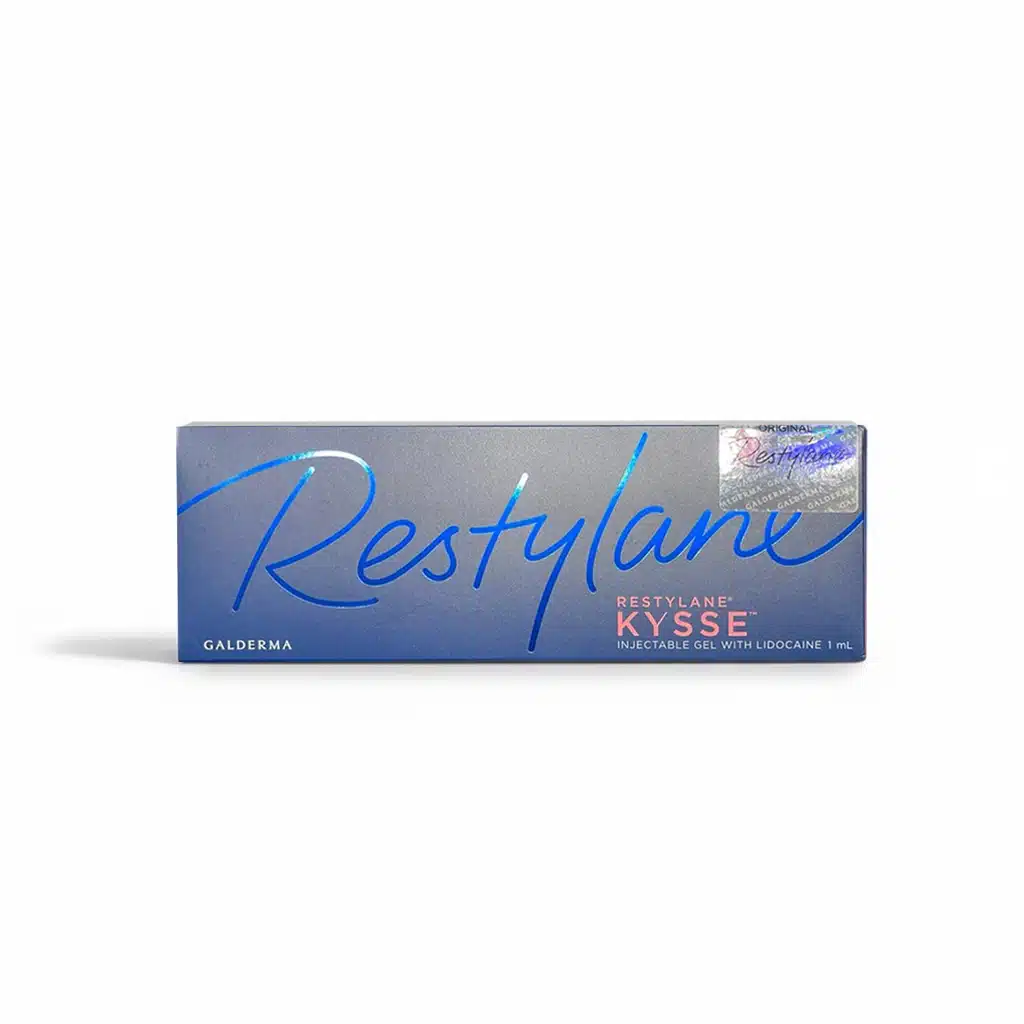
- Lips: KYSSE is the dedicated Restylane® lip filler, built specifically for Restylane® lip injections and perioral correction. It is widely regarded as the go-to option for lip enhancement in Restylane® protocols where practitioners want natural movement rather than a stiff, overfilled result. FDA clinical trial data showed KYSSE results lasting up to 12 months, which gives it one of the longest lip filler durations in the HA category. Is Restylane® good for lips? KYSSE’s XpresHAn Technology™ and clinical data make it the most straightforward recommendation in the range. Restylane® 1ml also supports more subtle lip volume goals.
- Folds and lines: DEFYNE and REFYNE target moderate to severe facial wrinkles and folds, with DEFYNE built for deeper correction and REFYNE for more moderate lines and wrinkles. Both are XpresHAn Technology™ products, meaning they allow Restylane® for wrinkles treatment without restricting natural facial movement. DEFYNE also holds the FDA-approved indication for chin augmentation. Restylane® Silk addresses similar perioral indications through a finer gel calibrated for subtle smoothing.
Restylane® before-and-after outcomes vary by product and treatment area, and practitioners should set realistic expectations with patients based on the specific formulation and injection site used.
NASHA® and XpresHAn Technology™: Comparing the Two Restylane® Technologies
Understanding the difference between Restylane®’s two cross-linking technologies helps explain why the brand assigns specific Restylane® fillers to specific indications rather than treating the range as interchangeable Restylane® injectables.
NASHA® technology produces a biphasic, particulate HA gel with higher G-prime, meaning greater structural firmness. [1] It behaves more like a structural building material under the skin, which is why it underpins LYFT, EYELIGHT™, Restylane® 1ml, and the SKINBOOSTERS™ line, all products where precise placement and lift matter more than flexibility.
XpresHAn Technology™ (also known as OBT, or Optimal Balance Technology) takes a different approach. Characterized by higher flexibility and tissue integration, it was engineered to flex along with facial movement rather than hold a fixed shape. [1] That is the technology behind KYSSE, DEFYNE, REFYNE, and VOLYME, products designed to move naturally when a patient smiles, talks, or purses their lips. VOLYME uses this same OBT platform to deliver high volumizing capacity in the cheeks and midface while maintaining smooth tissue integration, distinguishing it from the firmer NASHA®-based LYFT. [3]
Every product across both platforms is non-animal-derived hyaluronic acid (HA) and fully reversible with hyaluronidase. Can Restylane® be removed? Yes, and this reversibility applies across the full HA dermal fillers class, but Restylane®’s dual-platform design gives practitioners more indication-specific control than most single-technology ranges offer.
Full Restylane® Product Range: All 10 Products
NASHA® Products
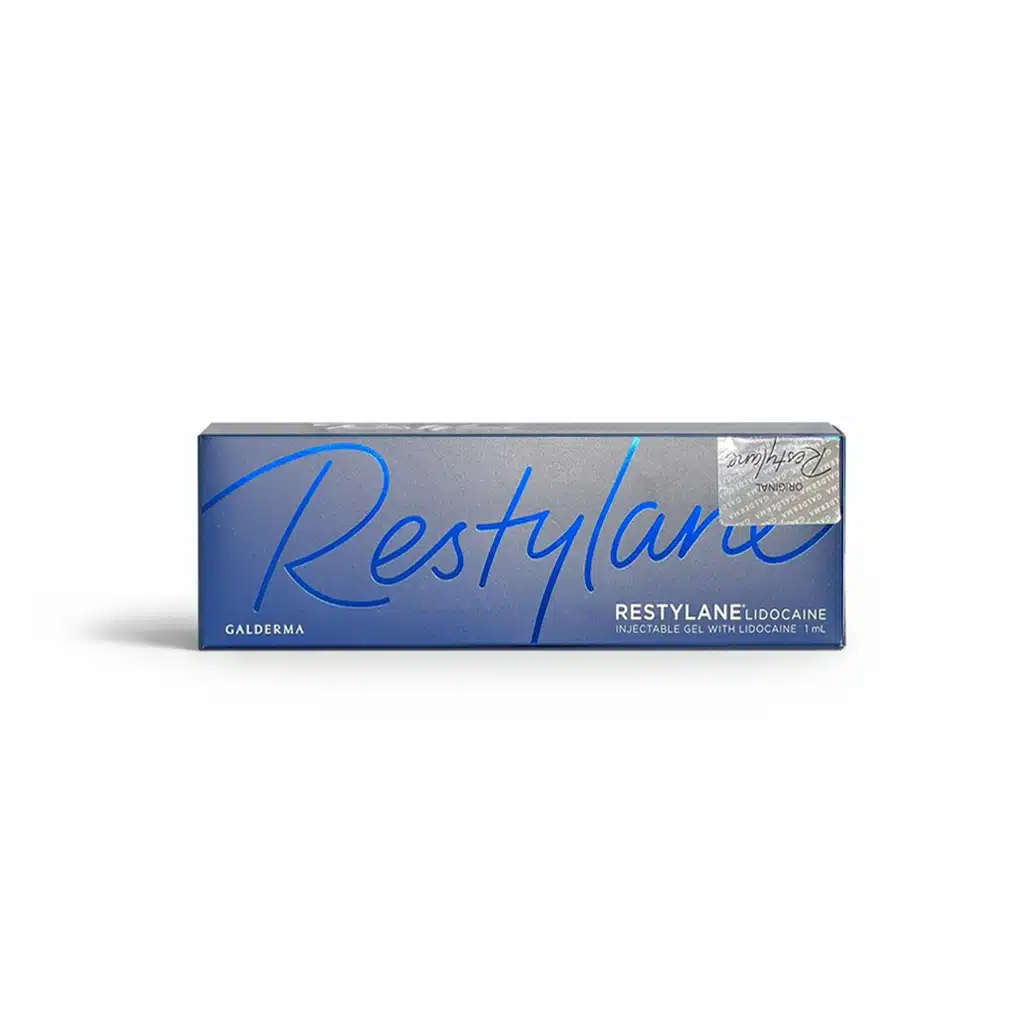
- RESTYLANE® 1ml with Lidocaine is the original Restylane® formula, still widely used for nasolabial folds, lip volume, and finer facial lines. It is the product that started the brand. This is a CE-marked product available primarily outside the US market.
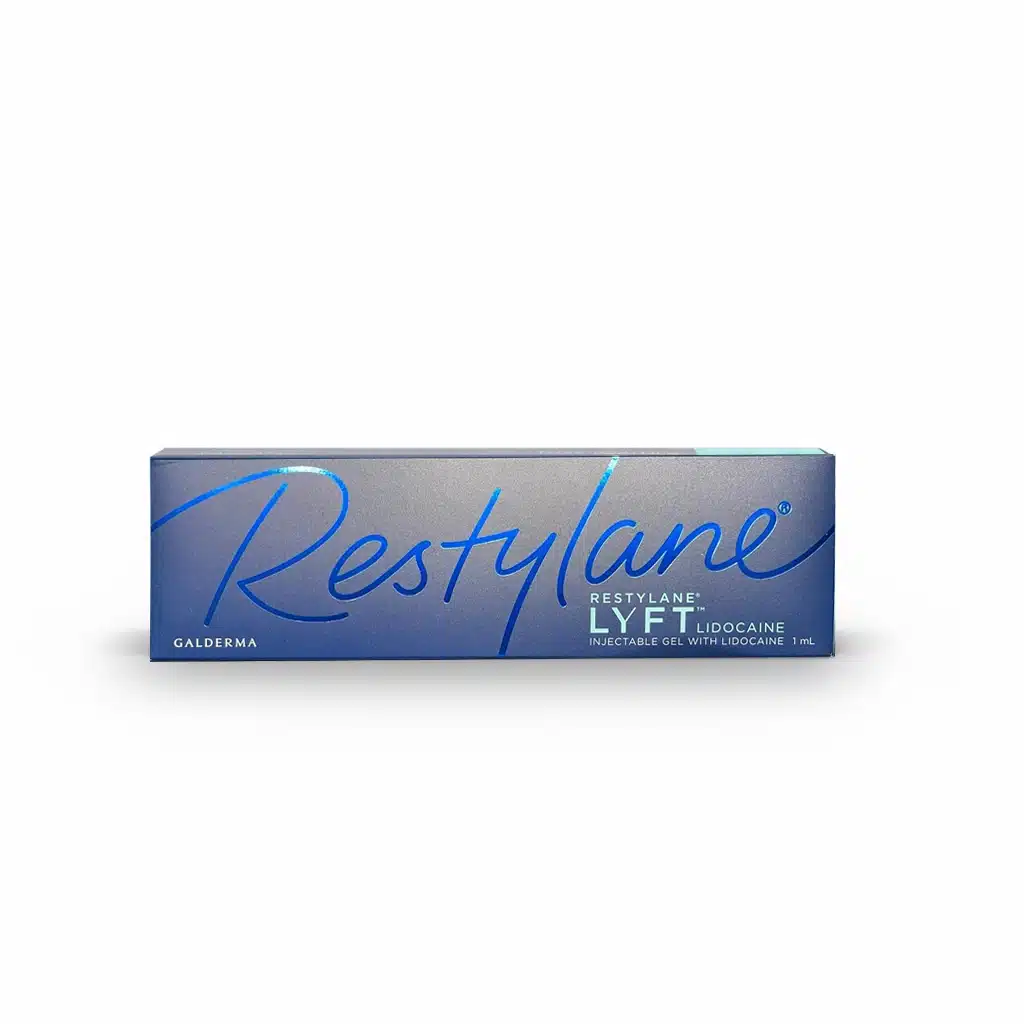
- RESTYLANE® LYFT uses NASHA® technology for cheek augmentation, midface volume restoration, and moderate-to-severe folds. It carries FDA approval for both cheek augmentation and hand rejuvenation, making it one of the more broadly indicated Restylane® fillers in the range.
- RESTYLANE® LYFT with Lidocaine is the same Restylane® LYFT dermal filler with lidocaine included for improved injection comfort.
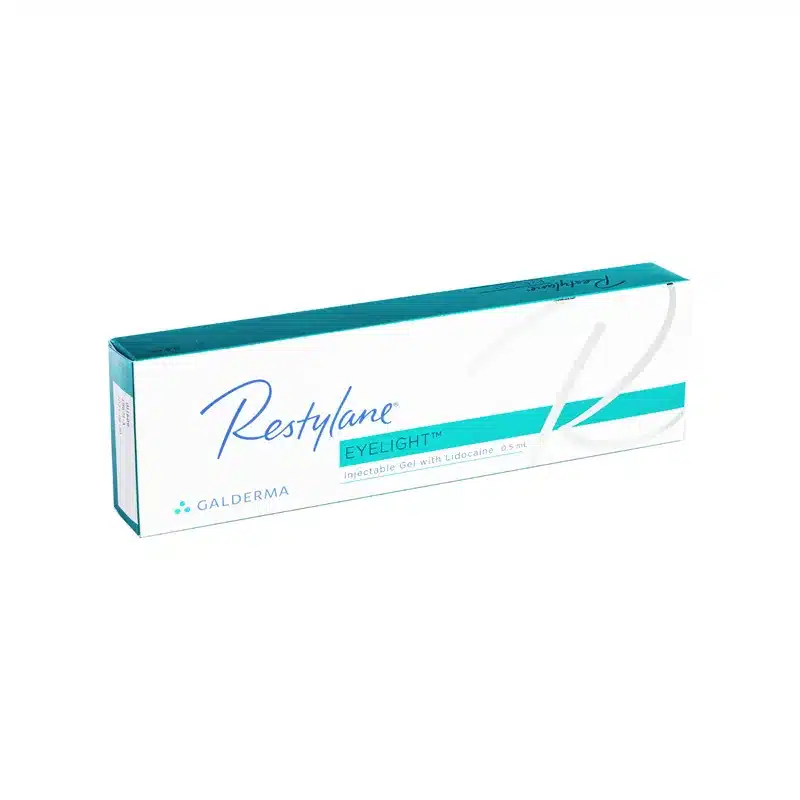
- RESTYLANE® EYELIGHT™ was developed specifically for the periorbital area and tear trough, packaged in a 0.5 mL syringe branded for under-eye treatment. Clinical study data demonstrated effectiveness for up to 12 months.
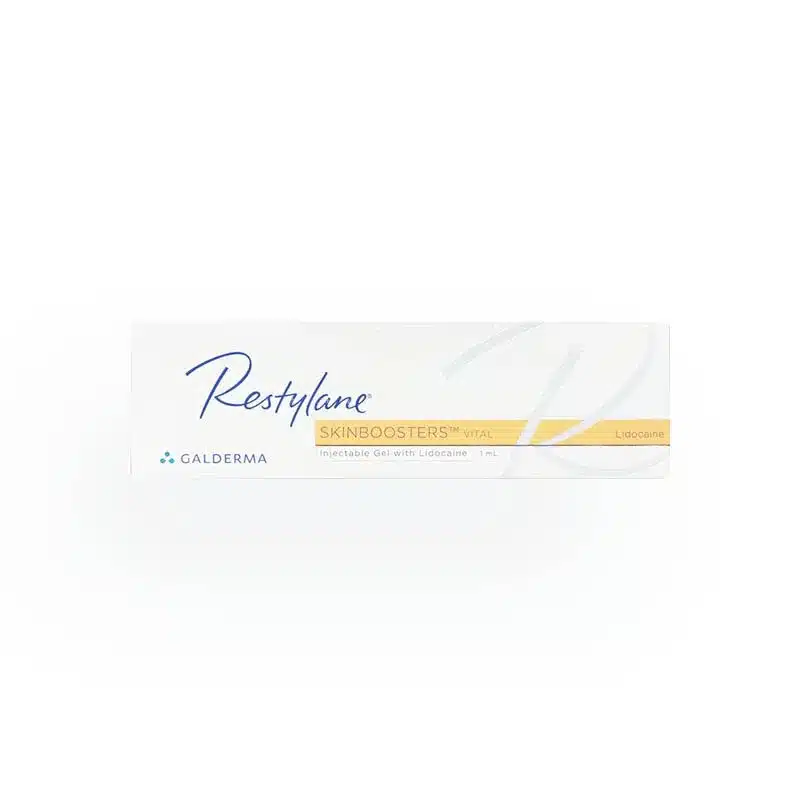
- RESTYLANE® SKINBOOSTERS™ VITAL with Lidocaine is an HA skin booster for deep skin hydration and quality improvement, typically delivered in a series of sessions across the face, neck, and hands. CE-marked and available primarily in markets outside the US.
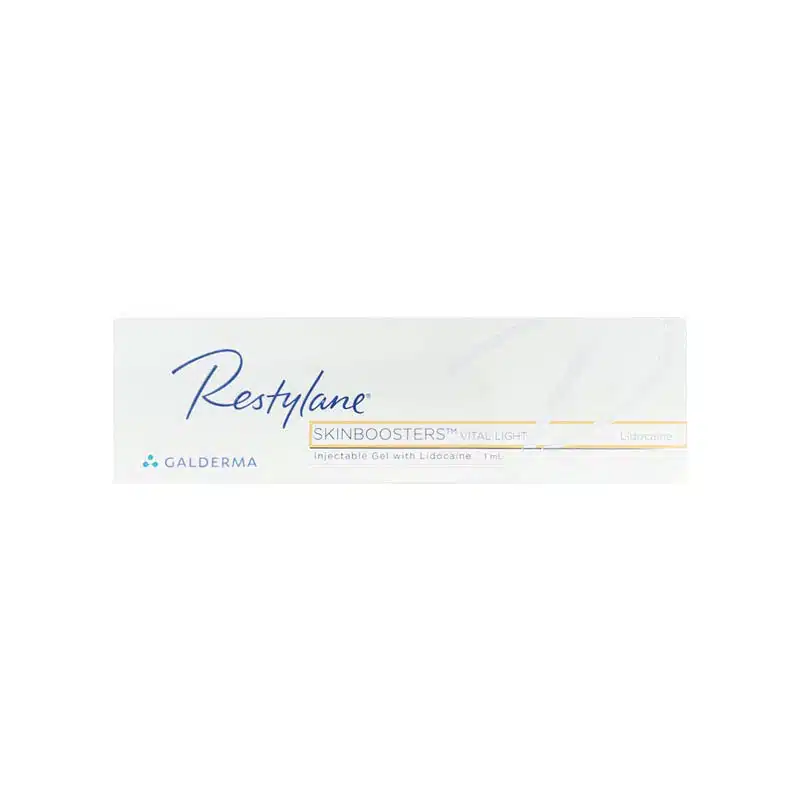
- RESTYLANE® SKINBOOSTERS™ VITAL LIGHT with Lidocaine is a lighter Restylane® skinbooster formulation suited to thinner or more delicate skin areas where the standard VITAL product would be too heavy.
XpresHAn Technology™ Products
- RESTYLANE® KYSSE with Lidocaine is the brand’s dedicated lip filler. Formulated on XpresHAn Technology™, Restylane® KYSSE lip filler is designed to move naturally with the mouth and has demonstrated results lasting up to 12 months in clinical trials.
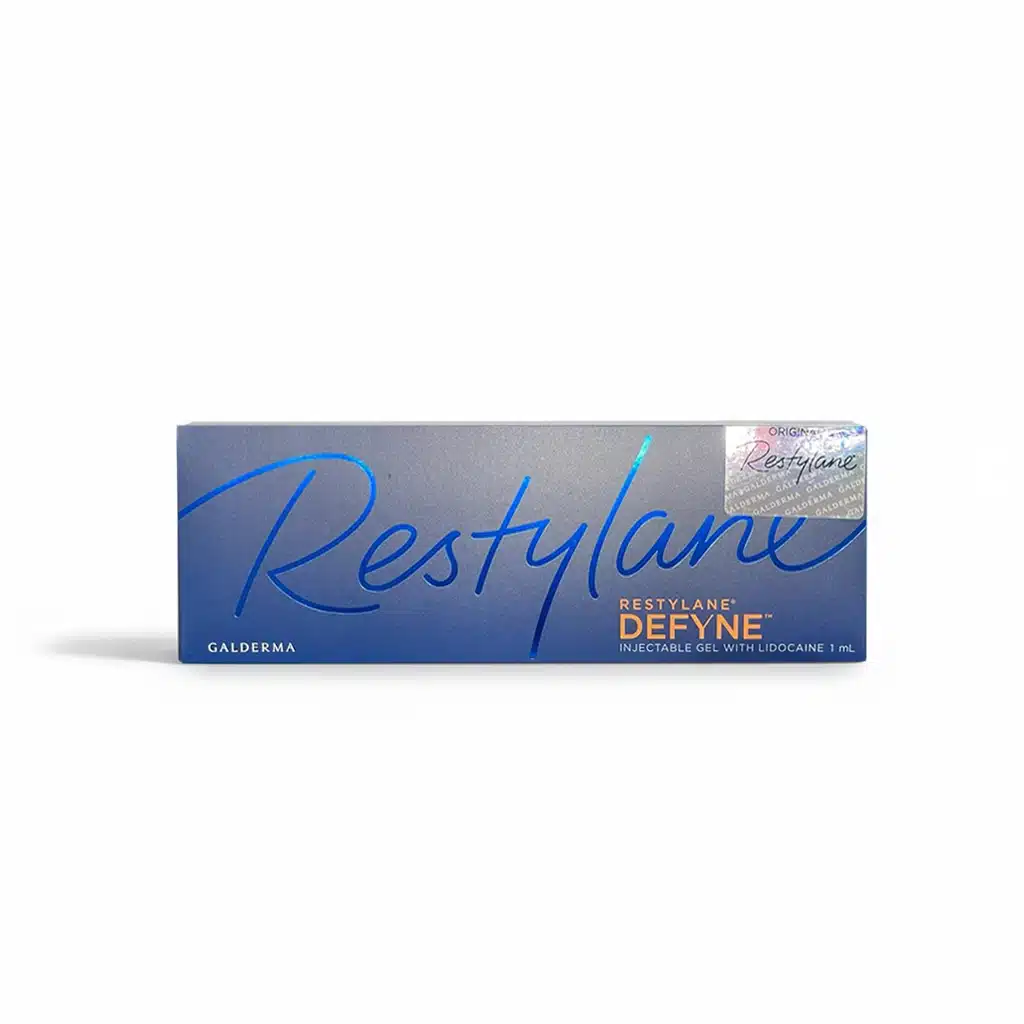
- RESTYLANE® DEFYNE with Lidocaine targets deeper lines and folds where correction without loss of natural expression is the goal. It also carries FDA approval for Restylane® chin filler augmentation. [4]
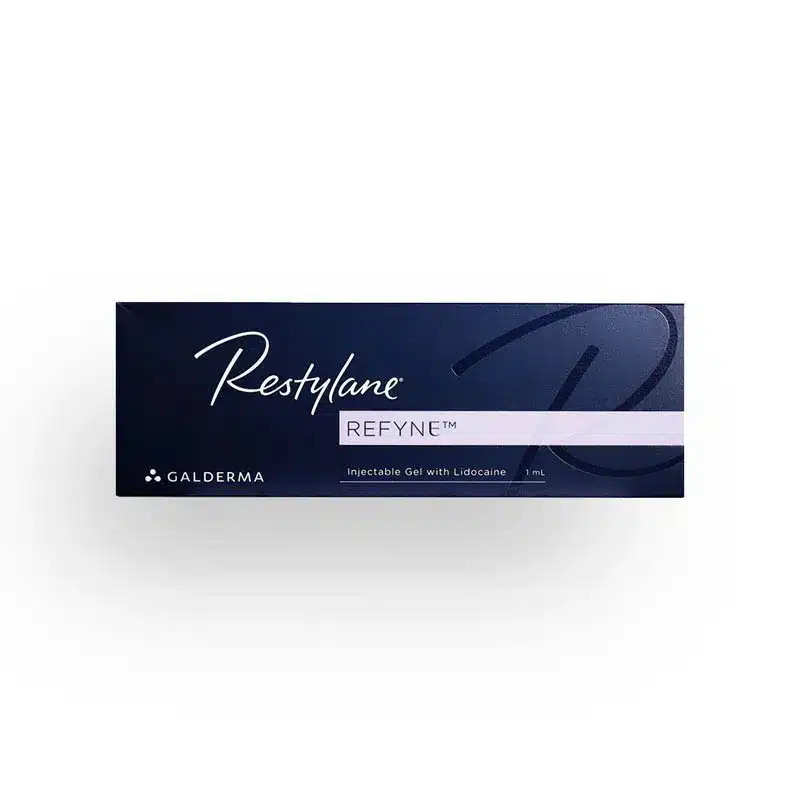
- RESTYLANE® REFYNE with Lidocaine is the softer counterpart to DEFYNE, intended for moderate lines and folds where preserving natural facial movement takes priority over firm structural correction.
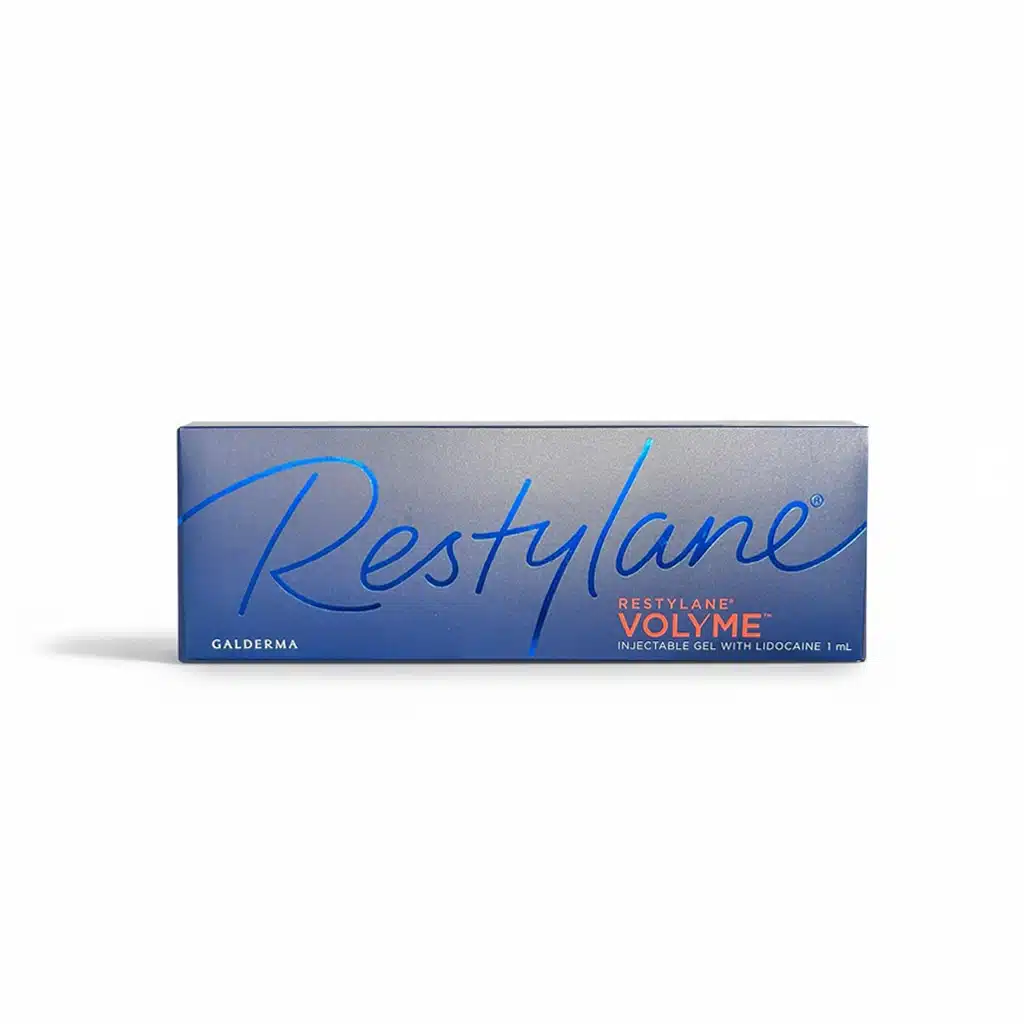
- RESTYLANE® VOLYME with Lidocaine is a CE-marked volumizing filler for cheek and midface augmentation, delivering pronounced fullness and volume for patients with significant age-related volume loss. VOLYME is available primarily in European and Canadian markets; its US FDA-approved equivalent is marketed as Restylane® Contour.
Regulatory Status
Restylane® carries one of the broadest regulatory profiles among hyaluronic acid fillers. The product line holds CE marking for the EU and UK, while several formulations, including LYFT, KYSSE, DEFYNE, and REFYNE, have received FDA approval for specific indications in the United States. Not all ten products are individually FDA-approved under their current brand names; VOLYME, SKINBOOSTERS™, and Restylane® 1ml are CE-marked products available primarily outside the US market, with Restylane® Contour serving as VOLYME’s FDA-approved US counterpart. Galderma manufactures the line under ISO-certified quality standards. LYFT’s FDA-approved indication for hand volumization expands the brand’s clinical applications beyond facial aesthetic treatments alone. [4]
Restylane® Compared to Other HA Fillers
Practitioners evaluating Restylane® against other brands need specific clinical and technical differences, not generalizations. Here is how the range compares to five other major HA filler lines.
Restylane® vs. BELOTERO®
BELOTERO® (Merz) is built on Cohesive Polydensified Matrix (CPM) technology, which produces a soft, highly cohesive gel that integrates particularly well into superficial fine lines and skin depressions, an area where it has a noted edge over Restylane® 1ml for very fine corrections. [3] Restylane®’s broader ten-product range, however, covers volumizing, contouring, lip work, and skin quality under a single brand more comprehensively than BELOTERO®’s current portfolio. BELOTERO® does not currently offer a dedicated lip product with the same body of clinical data as Restylane® KYSSE. Both are reversible HA fillers with broadly comparable duration.
Restylane® vs. STYLAGE®
STYLAGE® (Laboratoires VIVACY, France) uses IPN-Like® cross-linking and incorporates mannitol, an antioxidant intended to reduce post-injection swelling by neutralizing free radicals at the injection site. [1] That antioxidant inclusion is a genuine point of difference not present in Restylane® formulations. STYLAGE® competes well for facial volumizing and lip augmentation, but Restylane® holds deeper global regulatory approval, including FDA clearance in the US. STYLAGE® does not currently offer a dedicated skin booster or expression-adaptive line comparable to Restylane® SKINBOOSTERS™ or the XpresHAn™ range. Both are reversible with hyaluronidase.
Restylane® vs. REVANESSE®
REVANESSE® (Prollenium, Canada) is marketed as an ultra-pure cross-linked HA filler associated with lower post-treatment swelling, a tolerability claim that has clinical data behind it. REVANESSE® LIPS+ competes directly with Restylane® KYSSE for lip augmentation. Restylane® has the edge in depth of range: ten indication-specific products under one brand give practices more flexibility than REVANESSE®’s narrower lineup. REVANESSE® is competitively priced, and Restylane® carries broader CE and FDA approvals. Both are HA-based and can be dissolved with hyaluronidase.
Restylane® vs. JUVÉDERM®
Restylane® vs JUVÉDERM® is one of the most searched comparisons in the category, and the practical answer is that both are well-engineered fillers with different strengths. JUVÉDERM® (AbbVie) uses VYCROSS® or HYLACROSS™ technology, producing a cohesive, monophasic gel that many injectors find smoother for lips and superficial lines. Restylane® relies on NASHA® or XpresHAn™ cross-linking, producing a gel that is either more particulate and structural or more flexible and dynamic depending on the product. [3] Both product families last roughly 6 to 18 months depending on the specific formulation, and hyaluronidase can reverse either. The clearest technical differentiator is that Restylane®’s XpresHAn Technology™ products (KYSSE, DEFYNE, REFYNE) are engineered specifically to move with facial expression, which matters most for Restylane® for lips and other high-movement areas.
Restylane® vs. TEOSYAL®
TEOSYAL® (Teoxane, Switzerland) uses patented RHA® (Resilient Hyaluronic Acid) technology, cross-linked specifically to withstand dynamic facial movement, which puts it in direct comparison with Restylane®’s XpresHAn Technology™ products. TEOSYAL® REDENSITY I also competes with Restylane® SKINBOOSTERS™ in the skin quality and biorevitalization space. TEOSYAL® has a strong European clinical evidence base, but Restylane® holds broader FDA approval, including LYFT’s clearance for both cheeks and hands, giving it a more established US market presence. Both can be dissolved with hyaluronidase.
How Long Does Restylane® Last?
Depends on the specific product, treatment area, injection technique, and individual metabolism. While results differ from patient to patient, most products offer months of correction before maintenance treatment may be considered.
- Cheeks (LYFT / VOLYME): approximately 12 to 18 months. Note that VOLYME duration data reflects CE-market clinical use; US practitioners using Restylane® Contour should consult its specific labeling.
- Lips (KYSSE): up to 12 months, based on FDA clinical trial data.
- Nasolabial folds and marionette lines (DEFYNE / REFYNE): typically 9 to 12 months, with clinical studies supporting correction through 12 months for appropriate patients. [3]
- Under-eye (EYELIGHT™): up to 12 months, based on clinical study data.
- SKINBOOSTERS™: around 6 months, with periodic maintenance sessions recommended to sustain improvements in skin hydration and texture.
How long Restylane® will last in any individual case is impossible to guarantee, but the ranges above give practitioners a reasonable framework for treatment planning.
Migration is generally uncommon when the filler is placed correctly. XpresHAn™ products in particular are engineered to integrate with surrounding tissue, allowing natural facial movement while helping the filler remain in its intended treatment area.
Clinical Benefits of Restylane® for Practitioners
For practices evaluating whether Restylane® is a good filler to build a protocol around, two practical advantages set it apart from most competing HA filler brands.
- Broad Range: Ten products covering lips, cheeks, folds, under-eye, chin, hands, and skin quality under one brand gives a practice a full-face protocol without sourcing from multiple manufacturers. Fillers restore a youthful appearance most effectively when the injector can match a specific formulation to each treatment zone, and no other single HA brand covers as many facial features and indications.
- Dual-technology Precision: NASHA® for structural lift and XpresHAn™ for expression-adaptive flexibility means practitioners are not stretching one formulation across jobs it was not designed for. That technology split is the reason Restylane® can credibly claim to cover both static volumization and dynamic cosmetic treatments within a single brand.
Side Effects and Safety
Restylane® has a well-established safety profile, but patients should still be informed about potential risks during consultation before undergoing any cosmetic or plastic surgery procedure involving injectable fillers.
The most commonly reported side effects include temporary bruising, swelling, redness, and tenderness at the injection site. These reactions are typically mild, self-limiting, and resolve within days without additional treatment. Although uncommon, more serious complications such as vascular occlusion and nodule formation can occur and are largely influenced by proper injection technique and anatomical knowledge.
The product range is supported by decades of clinical use since its 1996 launch and includes multiple CE-marked and FDA-approved formulations. [1] Because every Restylane® product is composed of hyaluronic acid, it can be dissolved with hyaluronidase when correction, reversal, or management of a complication is clinically indicated. Can Restylane® be removed? Yes, across every product in the range.
Buy Restylane® Online — Medical Spa Rx
Medical Spa Rx supplies Restylane® directly to licensed healthcare professionals through a secure online ordering platform. Practices can compare the full Restylane® portfolio in one place, making it straightforward to select products based on treatment indications and choose between individual or bulk orders. We handle shipping and support throughout the process, so clinics can focus on treatment planning rather than procurement logistics.
Restylane® cost varies by product and order volume. Practitioners who buy Restylane® wholesale typically see better per-unit pricing on larger purchases or recurring orders. Contact our team for a quote tailored to your practice volume.
Buy Restylane® products from Medical Spa Rx by comparing the products listed above, adding items to your cart, or reaching out to discuss bulk pricing. Whether you need to order Restylane® online for routine restocking or a larger clinic-wide purchase, the platform offers secure ordering, reliable shipping, and dedicated support.
Frequently Asked Questions
What is Restylane®?
An HA dermal filler range from Galderma, spanning ten products across two cross-linking platforms (NASHA® and XpresHAn Technology™) for lips, cheeks, under-eye hollows, facial folds, and skin quality.
Who makes Restylane®?
Galderma, a global aesthetics company headquartered in Zug, Switzerland, and one of the largest hyaluronic acid filler manufacturers worldwide.
What is Restylane® used for?
Lip augmentation (KYSSE), cheek and midface volume (LYFT, VOLYME), nasolabial folds and chin augmentation (DEFYNE, REFYNE), under-eye correction (EYELIGHT™), skin hydration (SKINBOOSTERS™), and fine lines (Restylane® 1ml). The range covers nearly every common facial aesthetic indication.
How long does Restylane® last?
Between 6 and 18 months depending on the product and area treated. LYFT and VOLYME can last 12 to 18 months in the cheeks. KYSSE has shown results lasting up to 12 months in the lips. SKINBOOSTERS™ typically lasts around 6 months with maintenance.
Can Restylane® be removed?
Every Restylane® product is hyaluronic acid-based and can be dissolved with hyaluronidase. Migration risk is low with correct placement, and XpresHAn™ products integrate with tissue movement to remain in the intended zone.
Is Restylane® safe?
The line carries CE marking and FDA approval across multiple products, with a safety record spanning decades. Typical side effects are temporary bruising, swelling, and tenderness. Rare but serious risks such as vascular occlusion are technique-dependent.
Restylane® vs. JUVÉDERM®: what’s the difference?
Different cross-linking platforms: NASHA®/XpresHAn™ for Restylane®, VYCROSS®/HYLACROSS™ for JUVÉDERM®. Restylane®’s XpresHAn™ line is engineered for movement in dynamic expression areas. Both carry CE marking and FDA approval across multiple products. See the comparison section for product-level detail.
Where can practitioners buy Restylane® online?
Through Medical Spa Rx’s secure online platform. The portal allows clinics to compare Restylane® products, place individual or bulk orders, and complete purchases through a checkout process built for licensed healthcare professionals. Contact the team for bulk pricing or Restylane® filler kit options.
This page and all of its contents are intended for medical professionals. They are designed to inform only and are not a substitute for medical advice.
References
[1] Rohrich RJ, Ghavami A, Crosby MA. The role of hyaluronic acid fillers (Restylane) in facial cosmetic surgery: review and technical considerations. Plast Reconstr Surg. 2007;120(6 Suppl):41S-54S. doi:10.1097/01.prs.0000248794.63898.0f
[2] Morris CL, Stinnett SS, Woodward JA. Patient-preferred sites of restylane injection in periocular and facial soft-tissue augmentation. Ophthalmic Plast Reconstr Surg. 2008;24(2):117-121. doi:10.1097/IOP.0b013e318166dd2a
[3] Micheels P, Porcello A, Bezzola T, et al. Clinical Perspectives on the Injectability of Cross-Linked Hyaluronic Acid Dermal Fillers: A Standardized Methodology for Commercial Product Benchmarking with Inter-Injector Assessments. Gels. 2024;10(2):101. Published 2024 Jan 26. doi:10.3390/gels10020101
[4] Galderma. FDA approval of Restylane® Lyft for hands. 2018. https://www.galderma.com/news/fda-approval-restylaner-lyft-hands

Written and reviewed by the Medical Spa Rx Editorial Team
All clinical and product claims on this page have been checked against peer-reviewed research, manufacturer data, and regulatory sources in accordance with our Editorial Policy .